I have been reflecting on some words from a dear friend who passed away earlier this year about how sometimes it is necessary to ‘stop the flow.’ Maata spoke of the importance of this phenomena as an intrinsic part of the cycles of nature. Maata Wharehoka had worked for decades on restoring Māori cultural practices and had done significant work on funerary practices. Death is a prime example of stopping the flow – well at least in the form where life has been vanquished. Our form shifts and decays, becoming the clay and water that make our materiality, seeping back into the earth.
At the time, I found this concept to be such a shift from the work I had been doing with river communities. First Nations peoples along the Murray Darling Basin (MDB) believe the importance of flow for the health of the river and of the people (human and more-than-human). Of course, the matter of cultural flows on the continent known as Australia is an important issue which has not been addressed properly in the state-by-state struggle for water. The impacts of colonisation have had a devastating impact on the lands and waterways of the MDB.
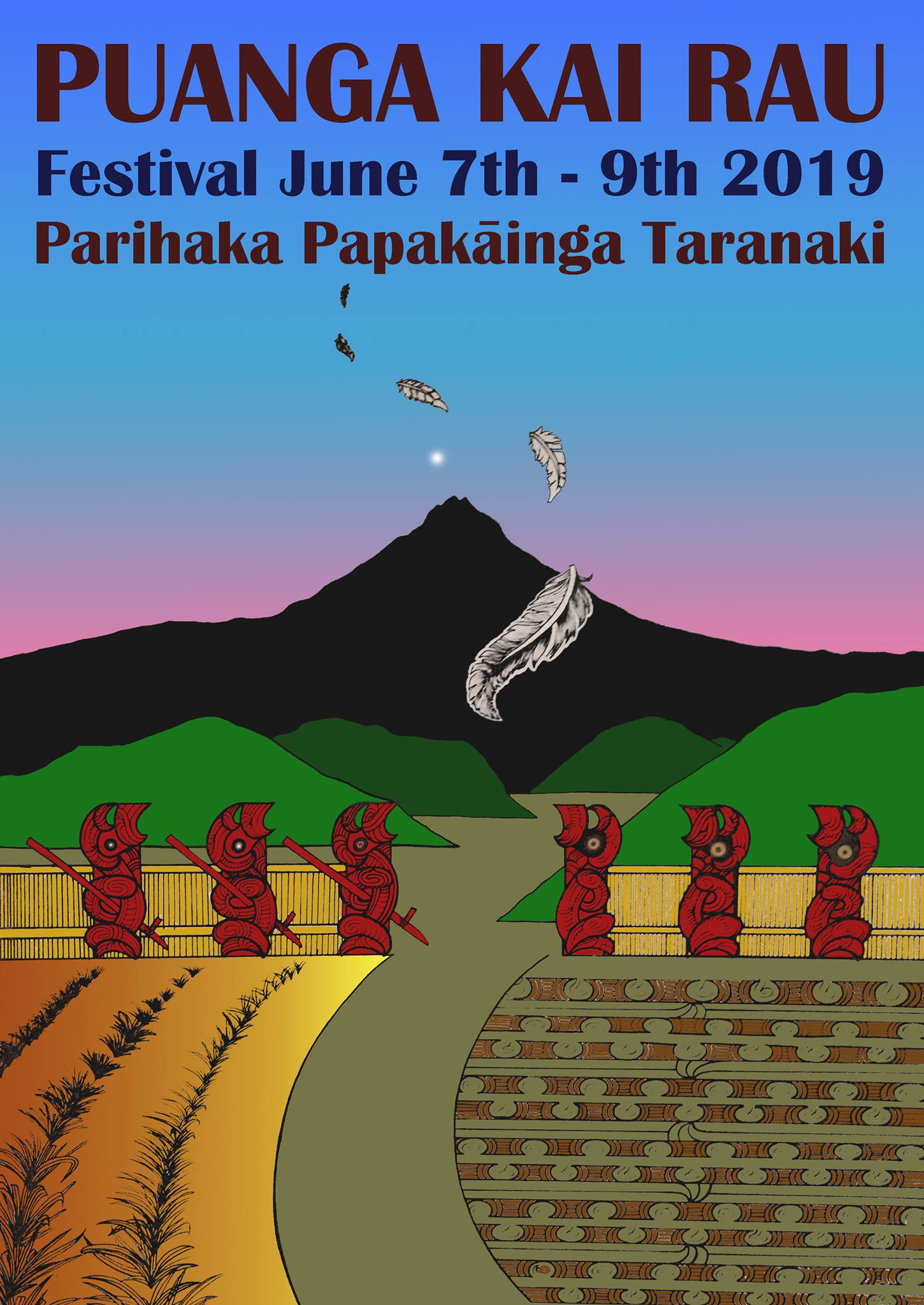
This thinking about Maata and flows coincides with the annual Puanga coming up on the calendar. For 5 out of the past 6 years I have made the pilgrimage to Parihaka for Puanga to see Maata, her family and my intercreate “whanau” who have been my collaborators, soul mates and comrades since I first visited Taranaki as part of a SCANZ residency in 2013. This residency in 2013 was transformational for me at a time I very much needed to find my creative community – people working across cultures, disciplines and technologies with a focus on ecology and place.

While I was on the residency, I wrote a series of blog posts. It seems fitting to reflect upon a post from 2013 which talks about my mountain and my river – connecting to the lands and water of Moreton Bay, to where I have now returned. It also seems like the mountain has also found its place as Taranaki Maunga was granted legal rights early in 2025.
Back in 2013, I felt so uncomfortable with my relationship to Country at home. I dearly loved the lands, waters and skies of where I was born and raised but I had an unresolved relationship with the tangata whenua “people of the land.” My sense was (and is) that until justice and healing come to the people – the land and water will also suffer. Because of the simple fact that if you steal something you do not give it the same value as something you have nurtured and communed with for thousands of generations.
At that first SCANZ I learnt much from Māori Elders – especially Te Huirangi Waikerepuru and Te Urutahi Waikerepuru. Huirangi encouraged us seeking wisdom from Indigenous knowledge to look to our own ancestors and the knowledge held in their lands. Urutahi taught me that if I walked with good intention then I can walk in peace. How right they both were and how honoured to receive this knowledge. This wisdom offered potential for healing and connection to the lands where I was born and the lands from where my ancestors came.

The other Elder who has been instrumental is my friend, mentor and collaborator Maata Wharehoka. We met when I returned in 2015 for SCANZ.
At the time I had the great honour of being part of a group of SCANZ residents who met with her at Parihaka. She welcomed us onto the marae so a couple of us could interview her and we could record it as part of the Intercreate archive. Out of the blue, Maata invited me to interview her and what resulted was a long conversation which connected us deeply. From that day we spoke about collaborating together on a project. Little did I realise then what an impact this enigmatic being would have on my life and self-awakening. The lessons have been coming ever since ❤

My experiences learning from Māori friends and Elders were lessons in heart – in the interconnectedness of all things. We need to be fully aware and present in our experience of the world and our place within these constellations of connection – inner, outer and eternal. One of the biggest learnings working with Maata was to have the courage to sit in the cognisance and discomfort that I had inherited privilege at the dispossession and colonisation of the rightful sovereign peoples. And with that realisation was the awareness that if I walked humbly and with awareness by honouring Country (people and place) that there might be a place to shelter.

There is much to reflect on and I am incredibly grateful for the community that evolved from that time. And perhaps it is time to stop the flow or recognise it has run its course.
This year Parihaki will have a private acknowledgement of Puanga. At first I thought we might still be able to go as we had paid for the trip and figured we might be ok as friends of Maata. The more I thought about this and discussed this idea with our friends the more it became clear that it was not appropriate to be there.
And while that made me initially feel very sad, bringing a fresh wave of grief I realised something else…. That now I live on the lands where my family have been making stories for 4 generations and that my friends are some of the Traditional Custodians of these lands. Our community also includes friends from many other First Nations cultures and every day I feel so blessed to be here – it is a daily act of gratitude.
That well of longing to connect has now been transformed into our living day to day reality. And when I comprehend that, then I realise that while the flow might stop in one place, that somewhere else a fresh spring bursts from the ground and a new river is born.
 Tracey M Benson || Bytetime