When we were in Venice in July, I had the incredible opportunity to meet with one of the curators of the AquaGranda project, Costanza Sartoris – thanks to an introduction from one of my colleagues at TransArt Institute.
AquaGrande is a transformative initiative that captures the spirit of a city long shaped by its relationship with water. As an artist deeply engaged with aquatic environments and the broader ecological systems they support, the AquaGranda project resonated deeply. I was encouraged by this project, inspired by the power of community memory, citizen science and the role of art and technology in preserving and sharing these narratives of place.
The AquaGranda Project: Preserving a City’s Memory
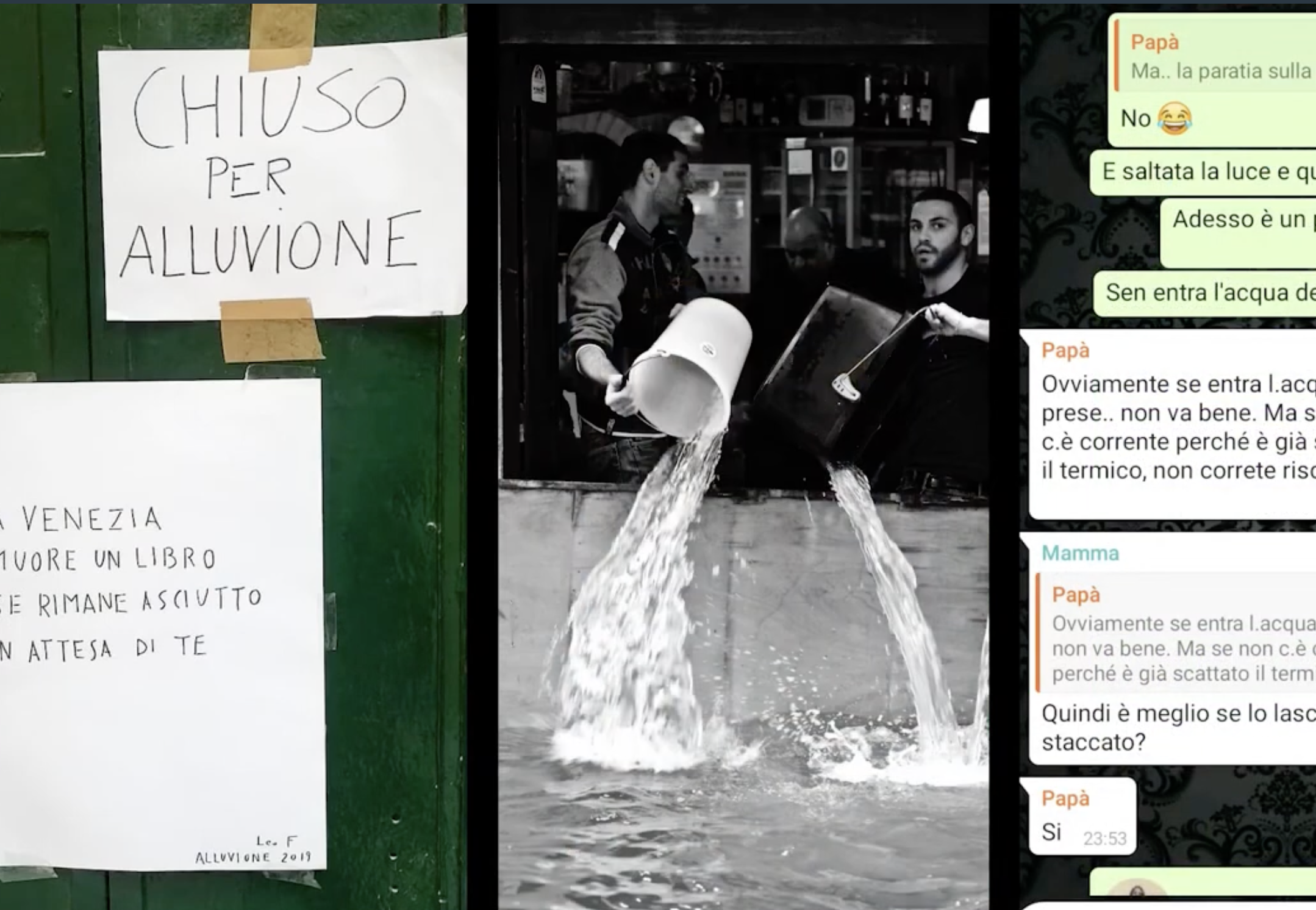
The AquaGranda project was a response to the catastrophic flooding that struck Venice on November 12, 2019, an event that locals refer to as “Acqua Granda.” This flood was one of the worst in the city’s history, leaving a deep mark on both its physical and cultural landscape.
As a means to document and preserve the experiences of Venetians during this harrowing time, personal stories, photographs, videos, and other forms of testimony were gathered as content for the project. AquaGranda creates a living archive that offers insight into the city’s ongoing struggle with rising water levels and the broader implications of climate change.
What makes AquaGranda compelling is the emphasis on community participation. This initiative is not just about recording history from an outsider’s perspective; it is a collective effort where the voices of those who lived through the flood are central to the narrative. Through their contributions, the project is a tapestry of lived experiences, weaving together the nuances of how different communities within Venice were affected and how they responded.
Meeting the Curator: A Conversation on Art, Memory, and Resilience
During my meeting with Costanza, we discussed how the project serves as a powerful example of how art, digital media, and community engagement can come together to document and respond to environmental crises.
I was particularly drawn to the evolving, generative aspect of this project. AquaGranda is not a static archive but an unfolding platform where new stories and perspectives continue to be added. It is a space where the past, present, and future of Venice are in constant dialogue, providing a dynamic resource for understanding the city’s resilience in the face of environmental challenges.
We also explored the parallels between AquaGranda and my own work on water and place, in particular the Weaving Water collective. Both projects are grounded in the belief that art can play a crucial role in fostering a deeper connection to our environments and in inspiring action. The AquaGranda project, in particular, underscores the importance of community in this process—how the collective memory of a place can become a powerful tool for resilience and change.
A Future of Collaboration and Shared Knowledge
Our meeting concluded with a shared sense of excitement about the potential for collaboration. The AquaGranda project aligns closely with my ongoing work through Treecreate, where we explore the intersections of ecological systems, art, and community engagement. There is much to learn from Venice’s experience and from the ways in which the AquaGranda project is harnessing digital tools to amplify the voices of those most affected by climate change. The AquaGranda project reminds us that even in the face of overwhelming challenges, there is power in collective storytelling and in the ways that art can help us navigate and respond to the crises we face.
Venice’s story is one of resilience, and through initiatives like AquaGranda, it is also a story of hope—a reminder that by coming together, we can create a more sustainable and connected future. We hope to share more about this amazing project with the Weaving Water community later this year.
To learn more about the AquaGranda project, visit their website.
 Tracey M Benson || Bytetime