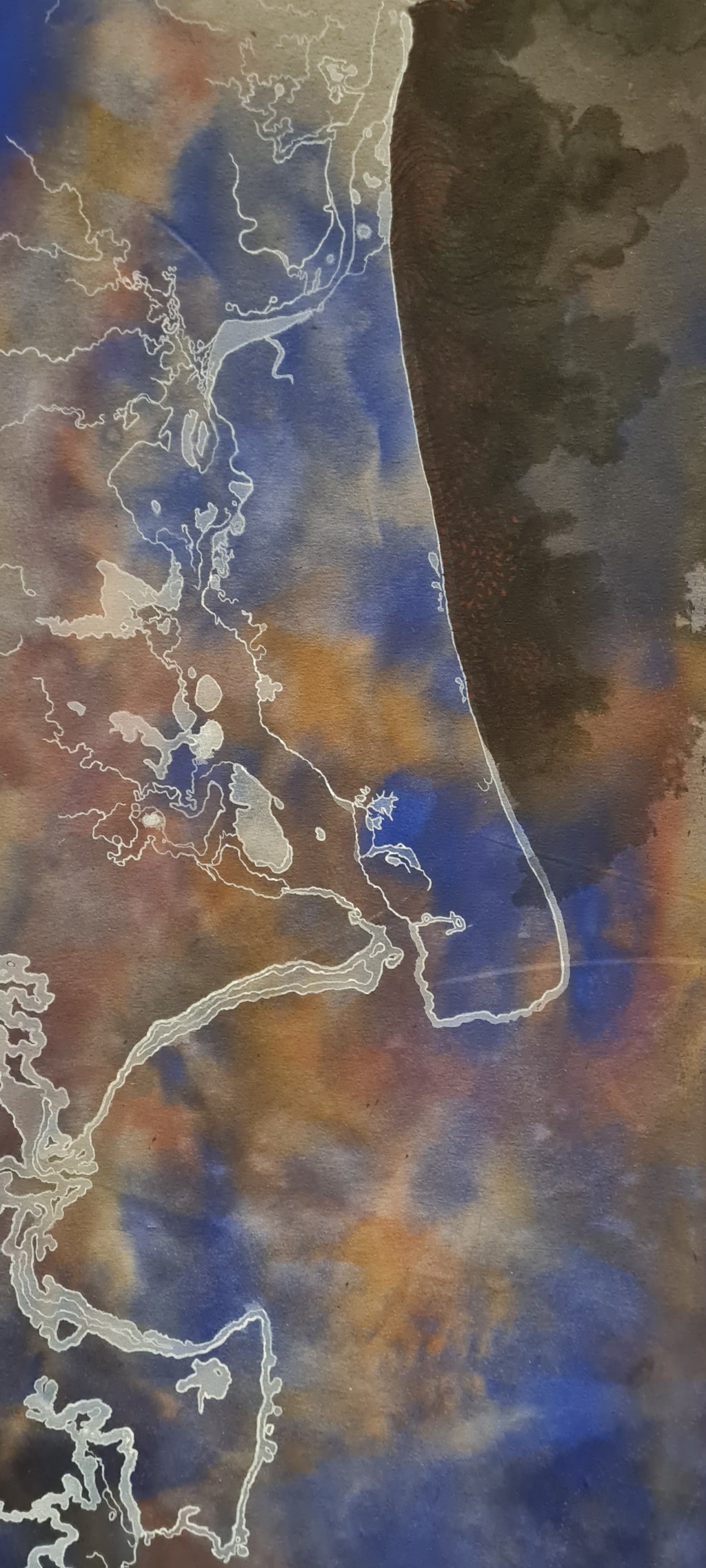
We recently had the pleasure of visiting the Queensland Art Gallery | Gallery of Modern Art (QAGOMA) to experience Judy Watson’s survey exhibition, mudunara: kundulama: wandaral: jararibirriri. This retrospective offers a comprehensive look into the career of one of Australia’s most significant contemporary artists, whose work deeply resonates with the themes of connection to land, culture, and history. Her work has been very influential for me personally as I was also trained as a printmaker and her use of layers to create multiple narratives within her work resonates strongly for me.
The title ‘mudunama kundana wandaraba jarribirri’ translates as ‘tomorrow the tree grows stronger’, is taken from a poem in Waanyi language by the artist’s son Otis Carmichael.
A Journey Through Watson’s Artistic Legacy
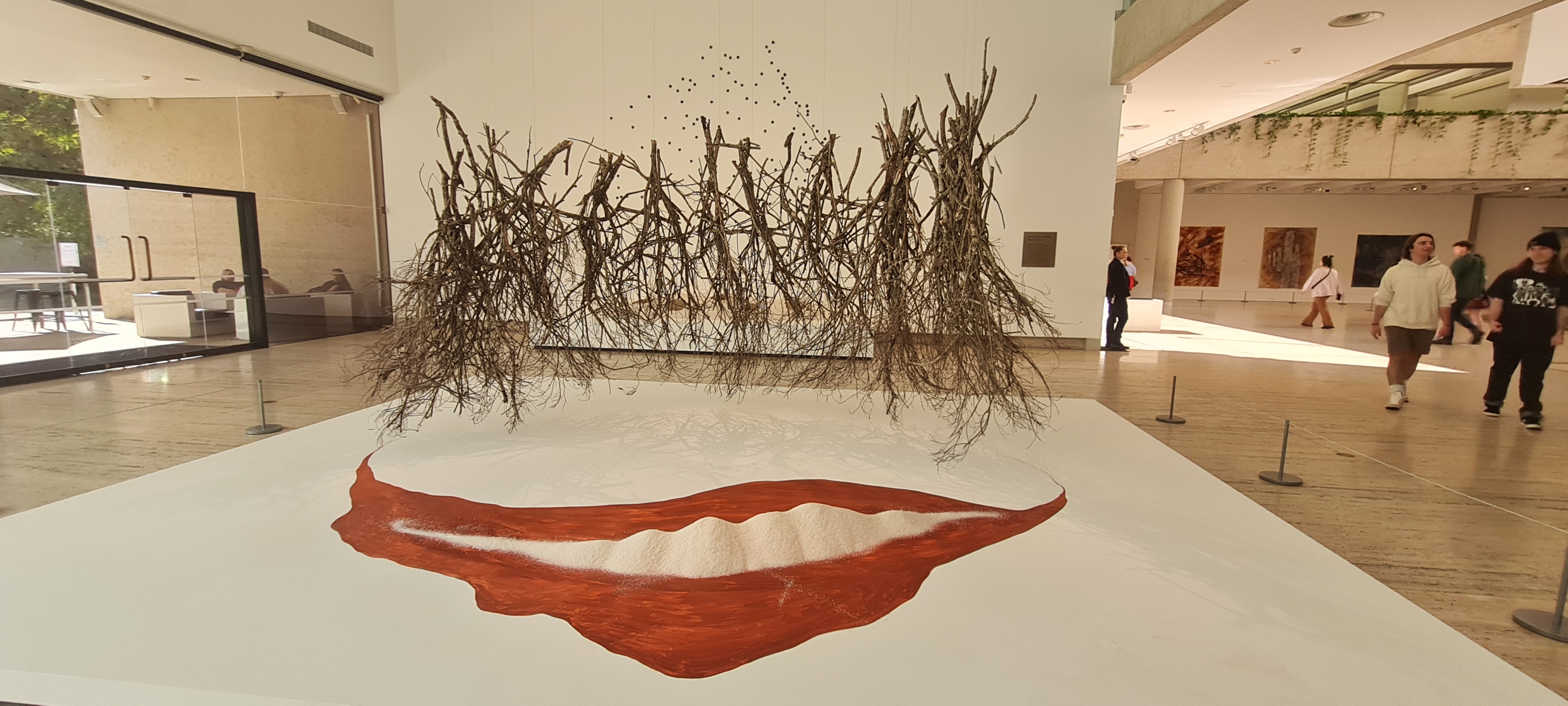
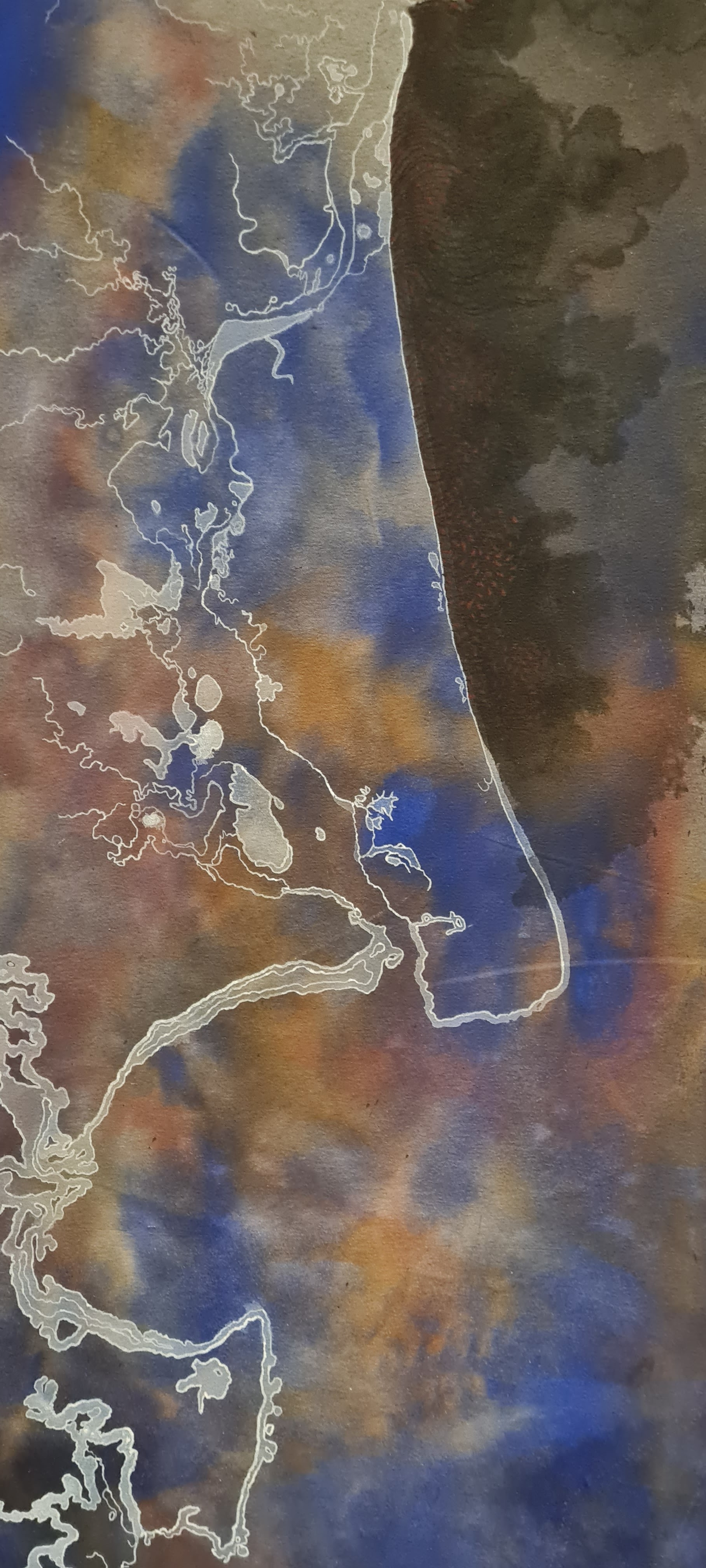
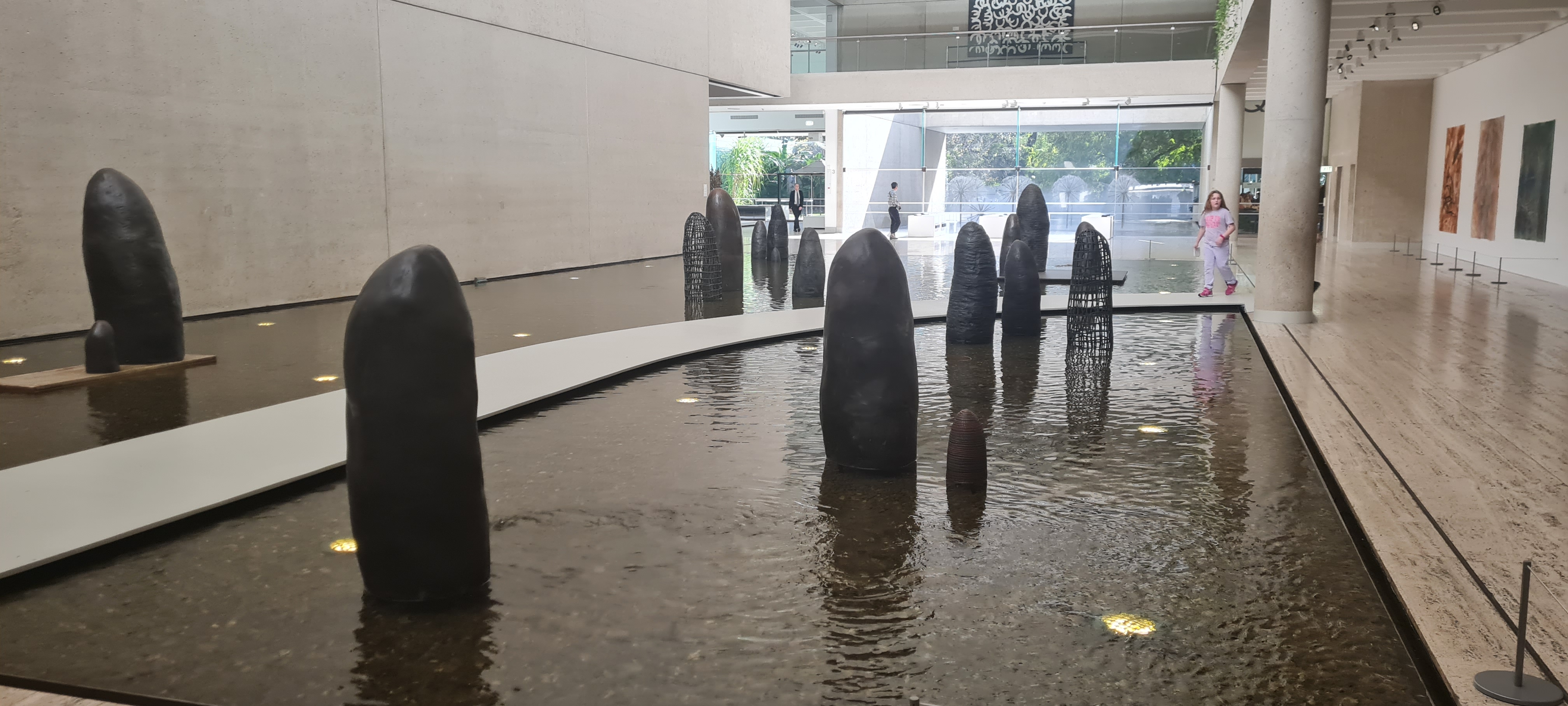
The exhibition, which runs until 11 August, 2024, showcases Watson’s journey as an artist, highlighting her extensive exploration of her Waanyi heritage, her background as a printmaker and her continuing engagement with Country. From early prints and drawings to large-scale paintings and installations, the breadth of Watson’s work is a testament to her enduring commitment to uncovering and representing the layers of memory and history embedded in the Australian landscape. Here are some of my favourite images from the exhibition – spot Yarun in one of the images 🙂
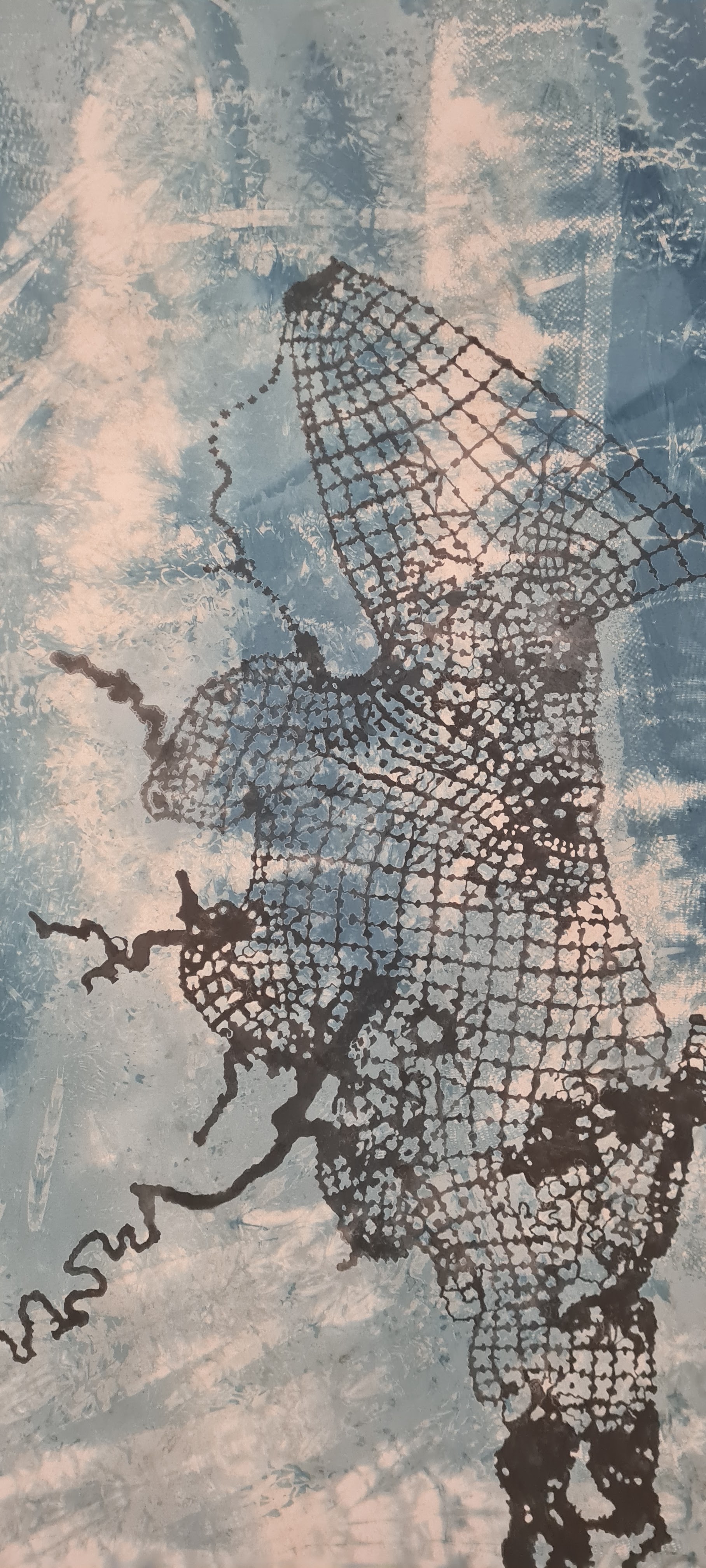
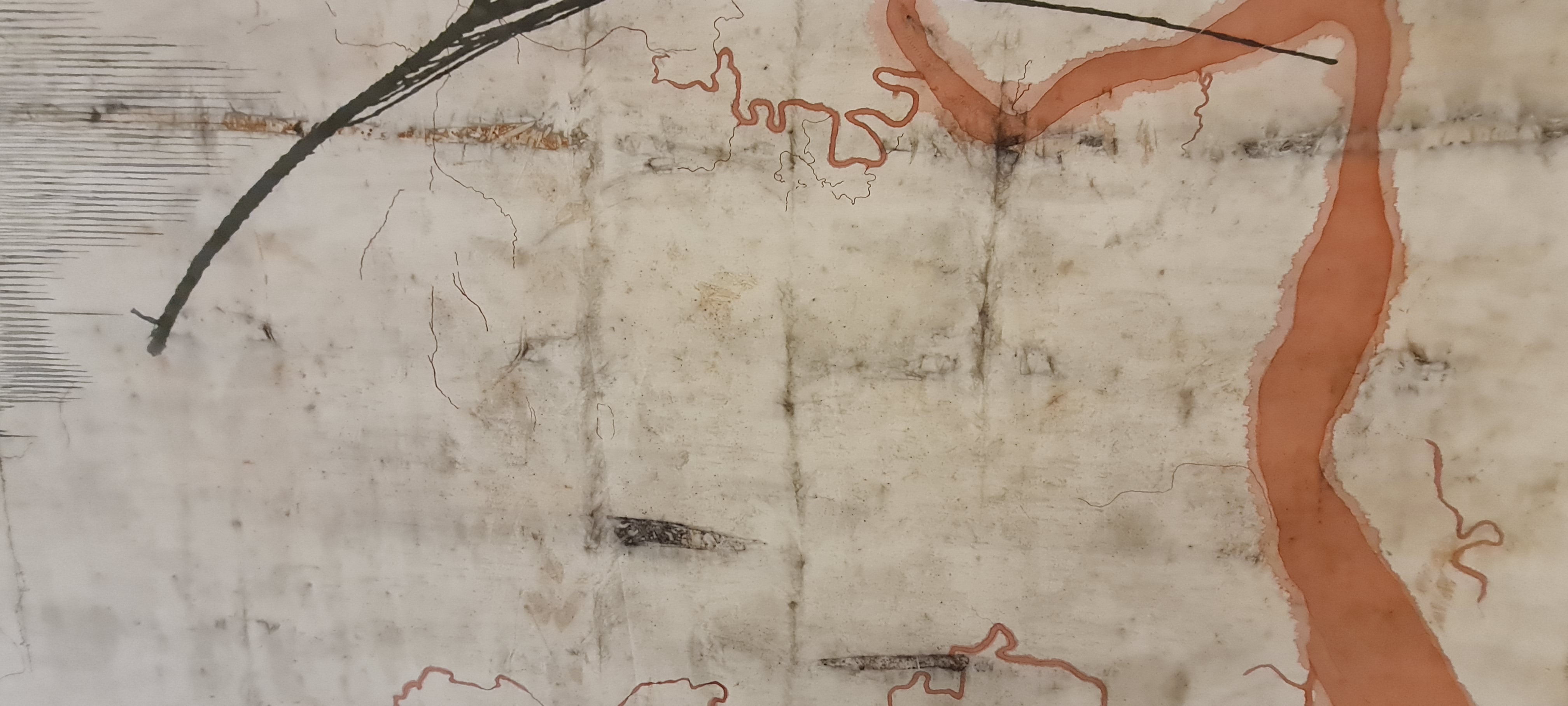
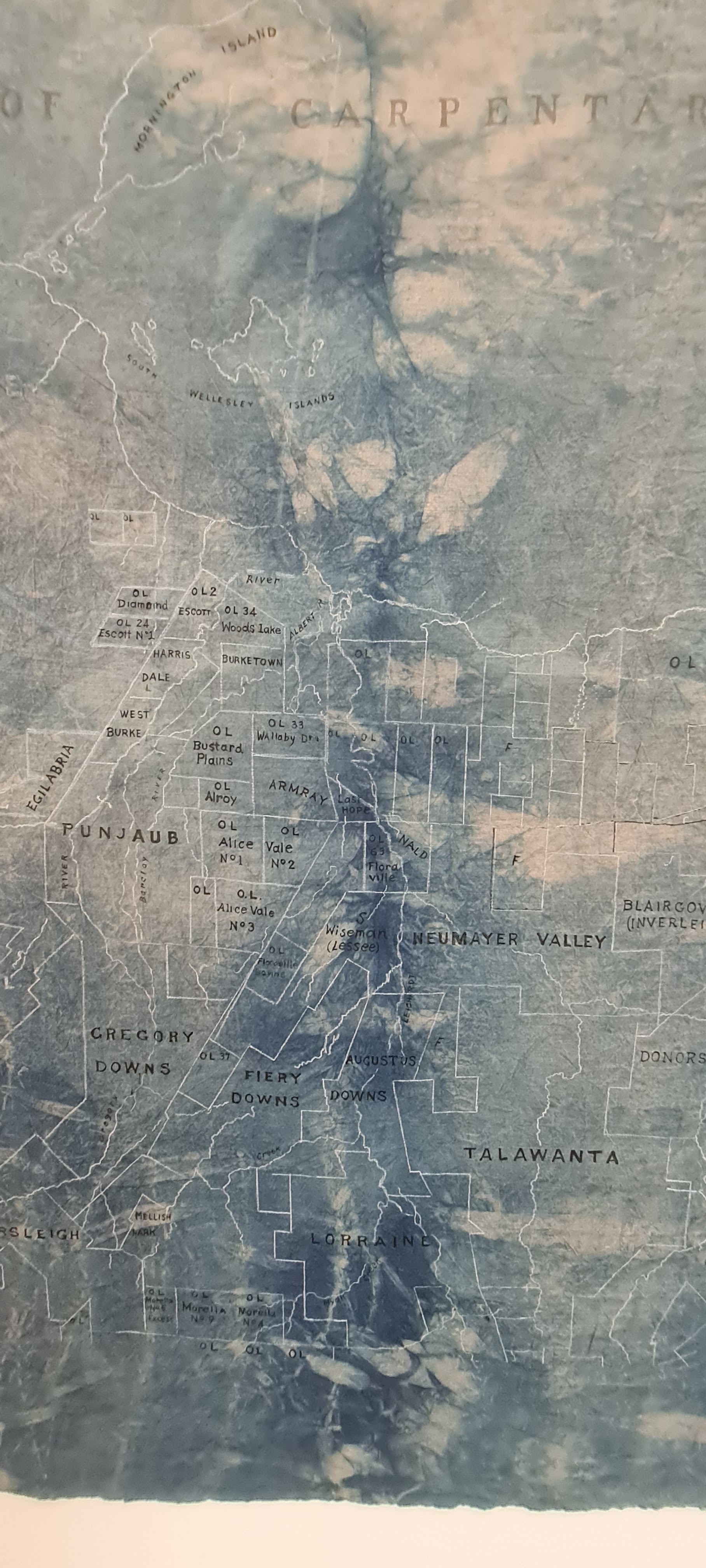
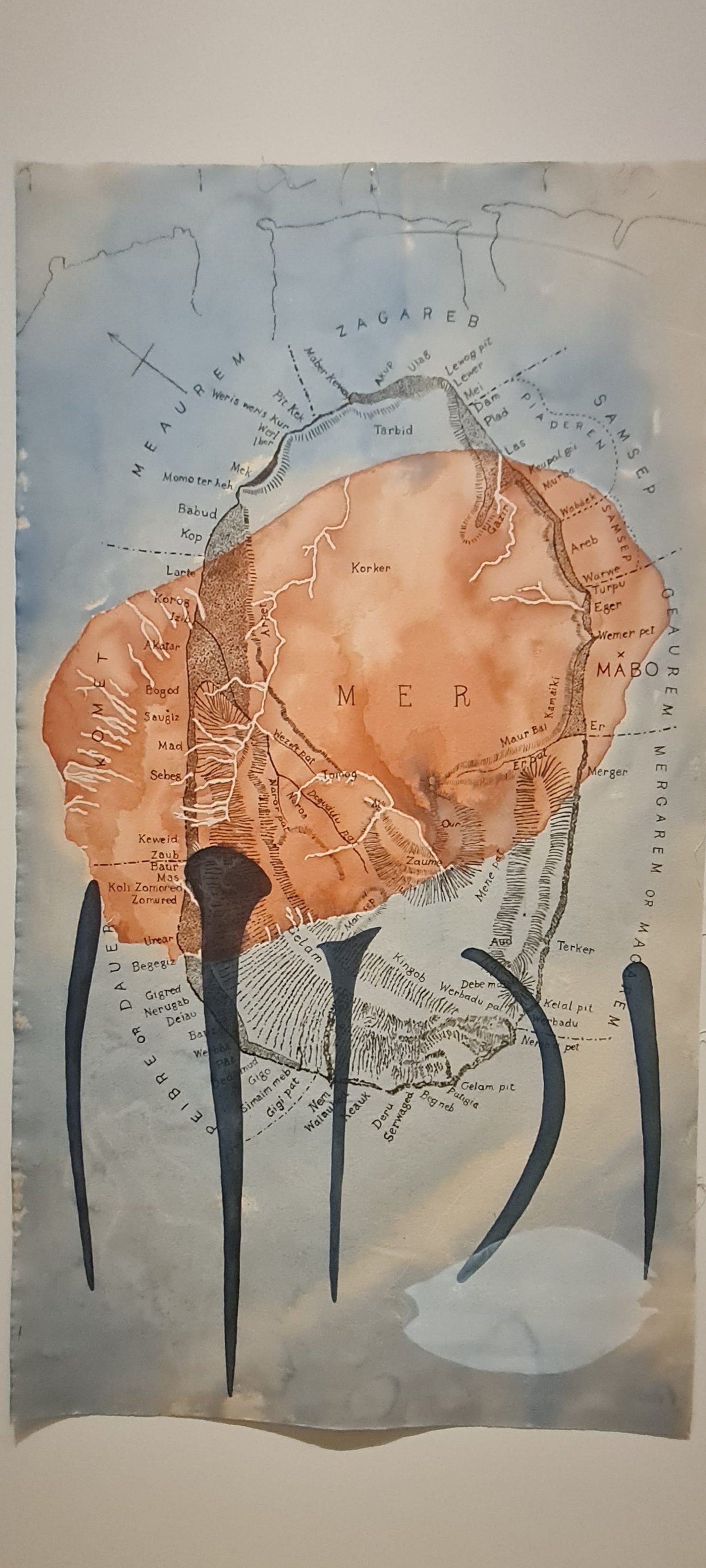
The Power of Place
Watson’s art is inherently tied to place, drawing on the landscapes of her ancestors to evoke a sense of belonging and continuity to Country. Her use of natural pigments, ochres, and earth tones create a direct link to the land, while her incorporation of found objects and historical documents adds depth and context to her pieces which at times are quite political in subject. Each artwork is a poignant reminder of the ongoing impact of colonisation and the resilience of Indigenous cultures.
Highlights of the Exhibition
For me, one of the standout pieces in the exhibition is water line, an installation that combines video, sound, and natural materials to create an immersive experience. The work invites viewers to contemplate the significance of water in Indigenous culture and its vital role in sustaining life. The flowing visuals and ambient sounds transport you to the rivers and waterways that have nurtured communities for millennia. This work resonated with my long term interest in water, best documented on www.words4water.art
Another notable work is the names of places, a series of etched canvases that list the Indigenous names of locations across Australia. This piece is a powerful act of reclamation, challenging the erasure of Indigenous knowledge and asserting the importance of these names in our collective consciousness. It reminded me of the extensive research my friend and colleague Nola Turner-Jensen has done in reclaiming Wiradjuri place names.
A Call for Reflection and Action
Watson’s exhibition is not only a documentation her artistic achievements but is also a call to reflect on our relationship with the land and its history. Her works encourage us to listen to the stories of the past and to recognise the enduring presence, strength and contributions of First Nations peoples on this continent. We all benefit from having access to this deep reservoir of knowledge and culture.
Visiting “mudunara: kundulama: wandaral: jararibirriri” was a deeply moving experience for me both as a fellow artist but also as a powerful reminder we live on unceded lands as uninvited guests, but through the generosity of our Frist peoples we can learn, grow and walk together. Watson’s ability to weave together personal and communal narratives, coupled with her masterful use of materials, creates a body of work that is both intimate and expansive. This exhibition is a must-see for anyone interested in contemporary art, Indigenous culture, place and the power of storytelling.


Leave a Reply