Post #1
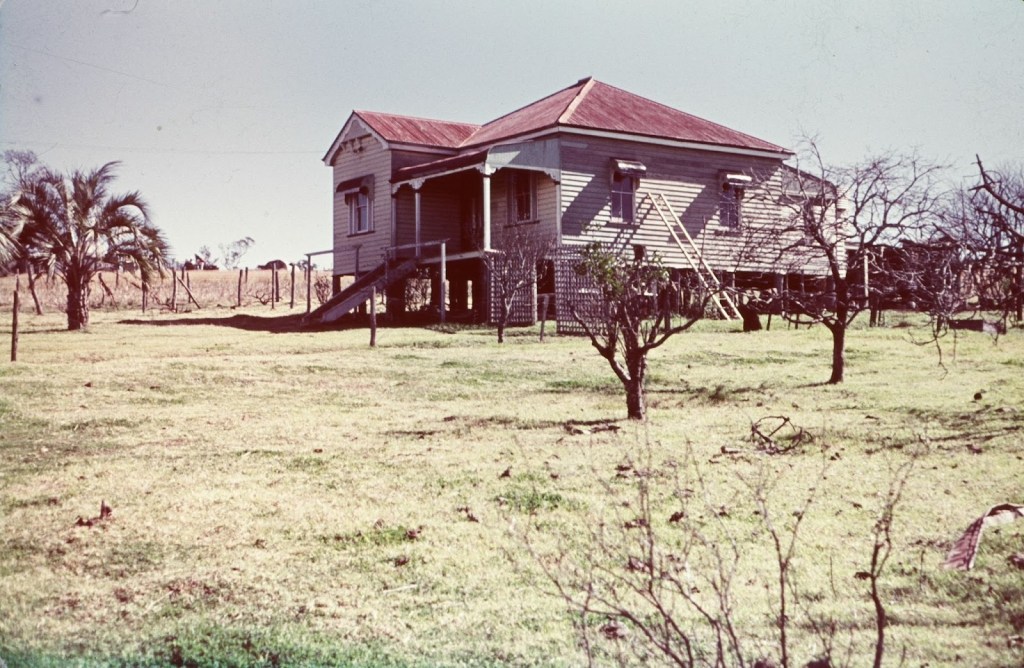
This is the first in a series of musings which explore what defines a Queenslander. In my research at University of Queensland, my emerging topic addresses the notion of the Queenslander house as an ecology which has the potential to inform future climate resilient home design. Part of my motivation to research this iconic style of vernacular architecture is due to my own relationships to these houses which are tied to my family and personal experiences in the 4 different periods I have lived in Queensland.
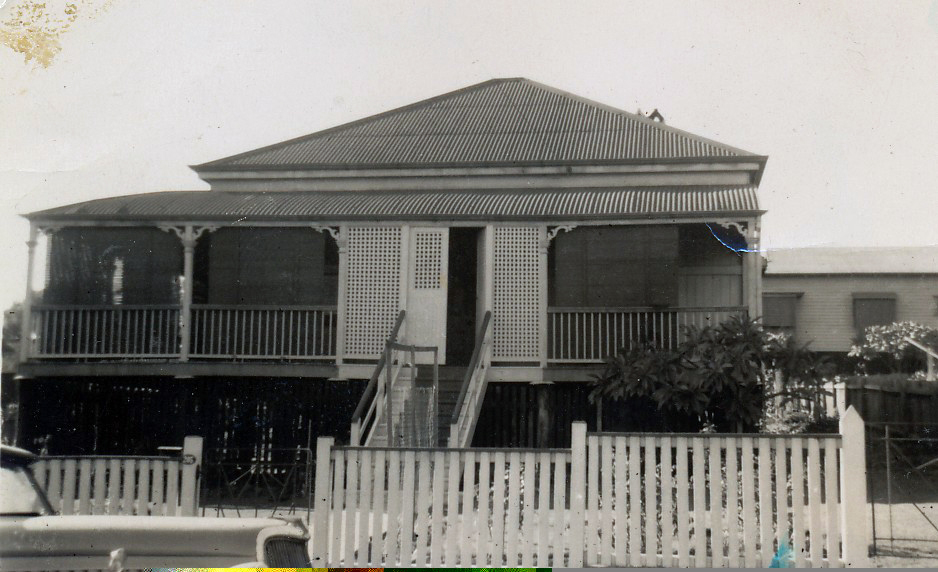
Another thread of interest has come from seeing these iconic houses and their surrounding gardens disappear. Over the past 50 years, I have seen many of these homes lost to development along with the green space of the garden and the identity of a place. Nundah is an example of a suburb which has lost so much of its built heritage and with it the stories and culture of what was a village in the emergence of Brisbane. On a personal level, I have early childhood memories of going to the shops on Sandgate Road with maternal and paternal grandmothers, who both lived close by. The 50 years in between has brought significant changes and now I struggle to find the remnants of those times in the shops and buildings along Sandgate Road – except for the “top” pub and the “bottom” pub. I have seen Brisbane and its surrounds change and grow with 1980s highway villages like Narangba and Burpengary becoming part of the outer sprawl of the city. Each time I have returned to Queensland, I have felt a sense of loss for the places and characters from my childhood…
As an artist, these themes have been explored through works such as Scalpland – which was a visceral response to the loss of the bush and nature of my childhood to the urban sprawl. That work is now 30 years old and these issues still niggle at my sleep. The clearing of the land erodes at my memories, its stories and its communities of living beings disappearing from our lives.
Now 30 years on, my interest in exploring ancestry, relationship to place and environmental awareness is somewhat more refined. Over 20 years working on environmental programs through government and community roles led to seeking out ways to better understand the human dimension of climate change, household energy vulnerability and sustainability behaviour change. In essence, I am drawn to what makes us act as a species thinking about future generations and why should anyone care… At the same time so many people live with precarity – liminal precarity – only one or two steps from homelessness and vulnerability.
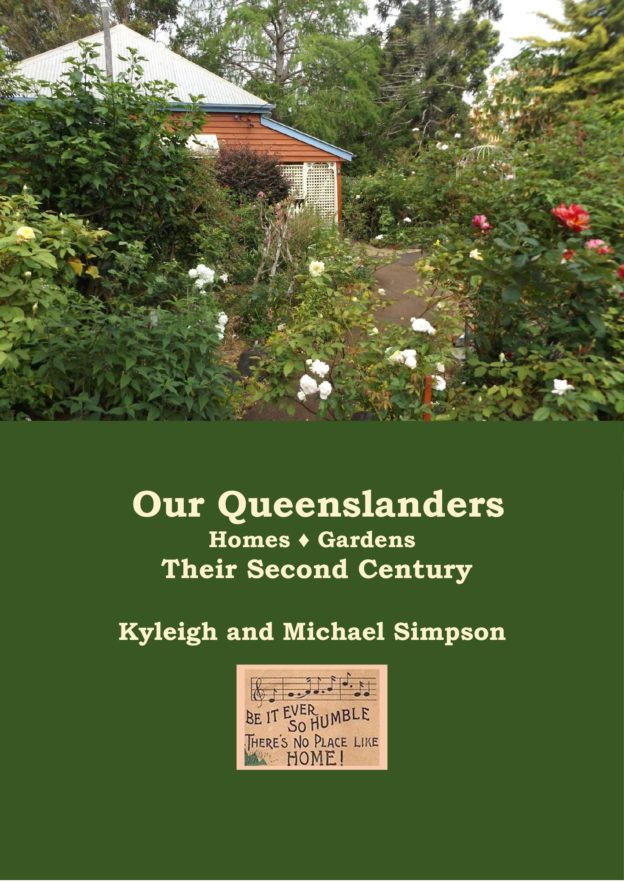
One of the books which I have found rich with examples of the relevance of the surrounds to the Queenslander house is this text “Our Queenslanders: Their Second Century”. Written by Montville locals Kyleigh and Michael Simpson, this small run (100 copies) publication offers a lot when considering the Queenslander house in concert with its plants, streets and places.
On the weekend we travelled up to Montville and visited Kyleigh and bought some of her books. We also had a quick tour of the garden which speaks to the love and care that this couple invested into their home since purchasing it in the 1980s. Kyleigh also generously shared some of her life story with her husband Michael who has since passed away.
The gardens are also open at different times of year and stunning to walk through – check out The Shambles website to find out more.
Why?
How do these rambling themes thread together? Great question 😉 To sum it up, I would like to see if the concept of the Queenslander house as an ecology has benefit to designing sustainable and climate resilient communities. This will probably change over time, but let’s start simple. The Queenslander as a subject is also about attachment and the realms of emotion – I am not alone in my love of these buildings and their resonance with the gardens, creeks and hills of the terrain where you will find them situated on Australia’s east coast anywhere north of Grafton.
The Queenslander house is also homage to the beauty and practicality of timber as a material – this is another juicy layer of family history, intergenerational skills with timber building. Many of these old houses were built with old-growth forests. It is a reasonable assumption that many of these trees also would have had cultural significance as it was common practice on the east coast for women to give birth in the trunks of trees, deliberately burnt out for this purpose.
Well, that is all for now – so much to learn about how we can learn from the past to inform innovations in the future ❤
References
Simpson, Kyleigh., Simpson, Michael (2019). Our Queenslanders: their second century : houses gardens. ©2019. [Montville, Queensland] : Kyleigh and Michael Simpson


Leave a comment